Everyone in media wants a creator program
At StreamTV in Lisbon, media leaders across the board were talking about partnerships on a new level.
First published on Creatorama ↗
“Want to come out to Lisbon in April and talk about all this?”
Evan Shapiro asked me this on a 20 degree morning in January, over breakfast at the building formerly known as the Time Warner Center, as we talked about what we thought creators and media could offer each other, and how rapidly everyone’s business models were converging into a new one.
I’d been catching him up on my work on the board of Electrify, a London-based company that invests in, operates, and scales creator-founded brands, as well as conversations I’ve had with a number of CEOs and execs of both traditional and new media businesses the past year.
What struck me was how many of these companies had begun programs in earnest to find new ways to partner with creators from YouTube and other platforms—deeper collaborations than influencer campaigns to promote a series, or casting a top influencer on a reality show. In the past year, we’ve seen FOX hire Billy Parks to lead their creator studios, Sony Pictures bring on Matt Ford for digital originals and creator partnerships, and creator partnership initiatives from Nat Geo and The Washington Post, as well as BBC’s new deal to put original shows on YouTube, after already having a long-running creator studio.
Evan told me a number of those companies from across Europe would be attending the StreamTV show in Lisbon, and it would be a great chance to connect with more of them. And of course, Lisbon sounds especially appealing when you’re enduring New York’s coldest winter in a decade.
I made my way out there this week to participate in a roundtable with my longtime friend Shira Lazar, one of the OG creator-entrepreneurs; producer Ben Odell, whose Open Gardens is one of my favorite newsletters; and Mel Tsiaprazis, whose company GYST is building tools to support creator-founded businesses. I’d recently written about YouTube’s studio era, and thought the four of us were there to be a fun bit of interest programming during a show that would largely be devoted to the more traditional concerns of streaming and TV.
I was so wrong. As it turned out, in nearly every talk and panel, and every conversation I had over meetings, meals, and networking breaks, creators and social platforms were top of mind.
Evan set the tone the first morning with a fun and provocative keynote, where he told a cautionary tale of two nepo babies—one investing heavily into the new attention economy, the other trying to own the old one. Evan pointed out that fragmentation is the new norm, and companies that understood fandom, affinity, and engagement were best poised to survive as audiences age, and attention moves from broadcast to social media.
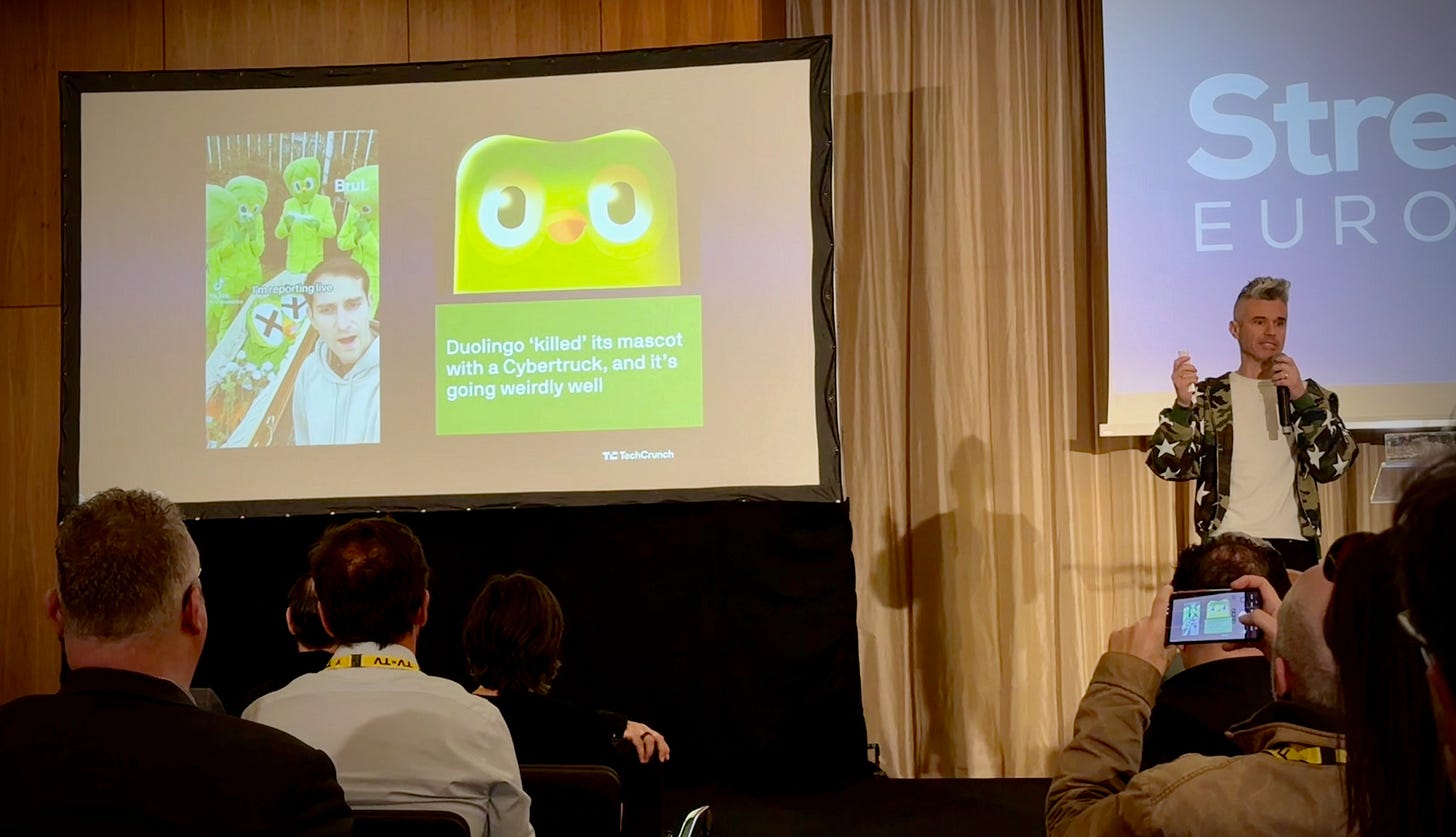
He also included a case study on Duolingo, based on his post last month, and gave me a very kind shout out from the stage, noting I’d be on at 4pm, which was likely a reason many of the execs I wanted to meet at the show ended up in our audience later that afternoon.
Evan has been urging media companies to change or die—highlighting the need to work with creators and digital-native businesses in order to better understand how affinity, engagement, and fandom work on the new social platforms. But in my conversations with people at some of these companies, they seemed a bit unsure of their value in the changing landscape. On our roundtable, we all agreed: the media businesses in the room, who might be concerned their three-letter brands don’t resonate with the generations coming up watching YouTube, making TikToks, and playing Roblox, had much to offer creators.
Major media companies have legal teams, biz dev, ad sales, talent programs, research, product development, licensing, libraries, tech—all things difficult and expensive for creator studios to build. They’ll need to be open to new ways of partnering, potentially sharing ownership, revenue, and subscribers with creator studios—but together they can make truly ambitious things to reach wider audiences, and better serve their current ones.
A roundtable that followed was a brilliant case in point, all about a new partnership between French news creator Gaspard Geurmonprez and broadcaster TF1, who are partnering to create a longform interview format for the upcoming elections.
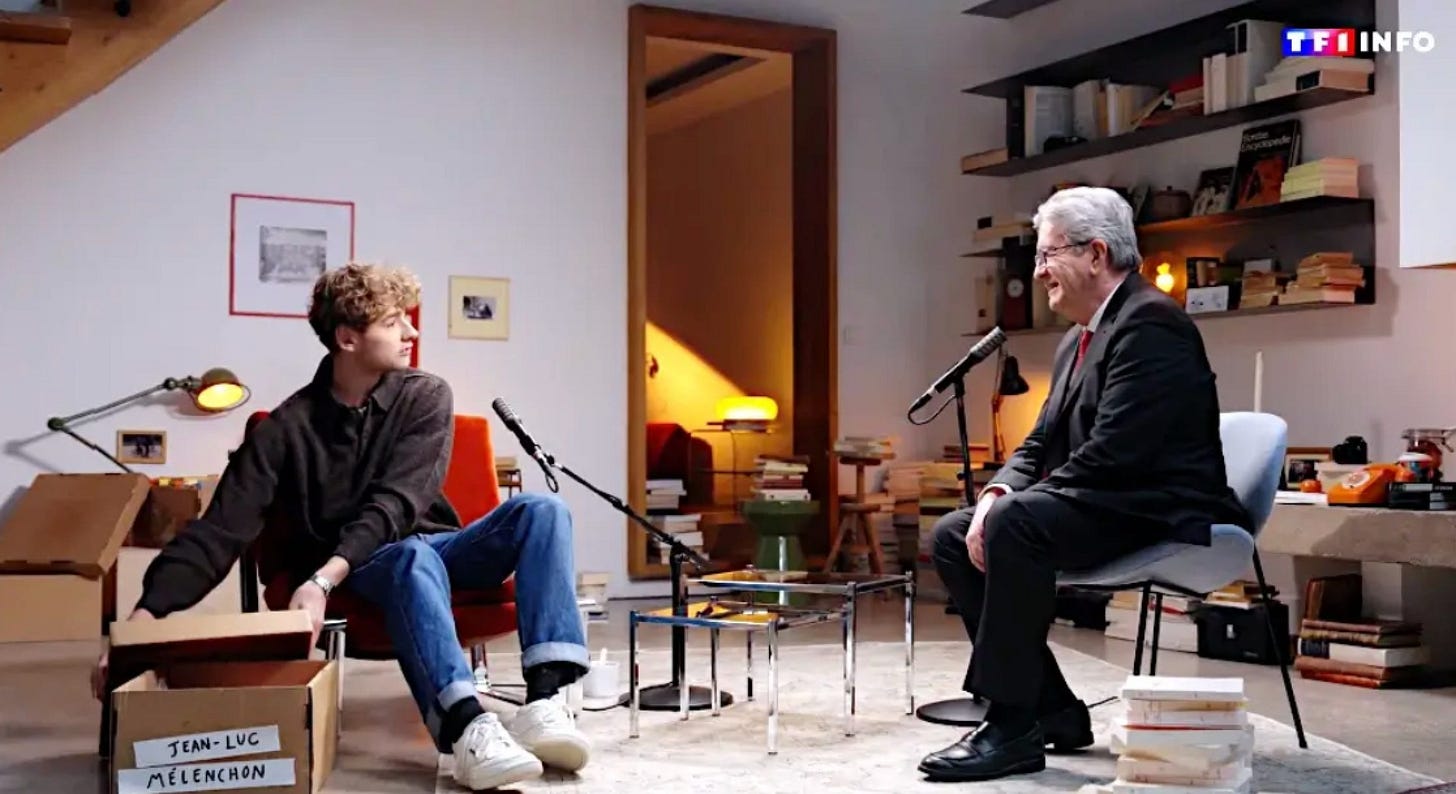
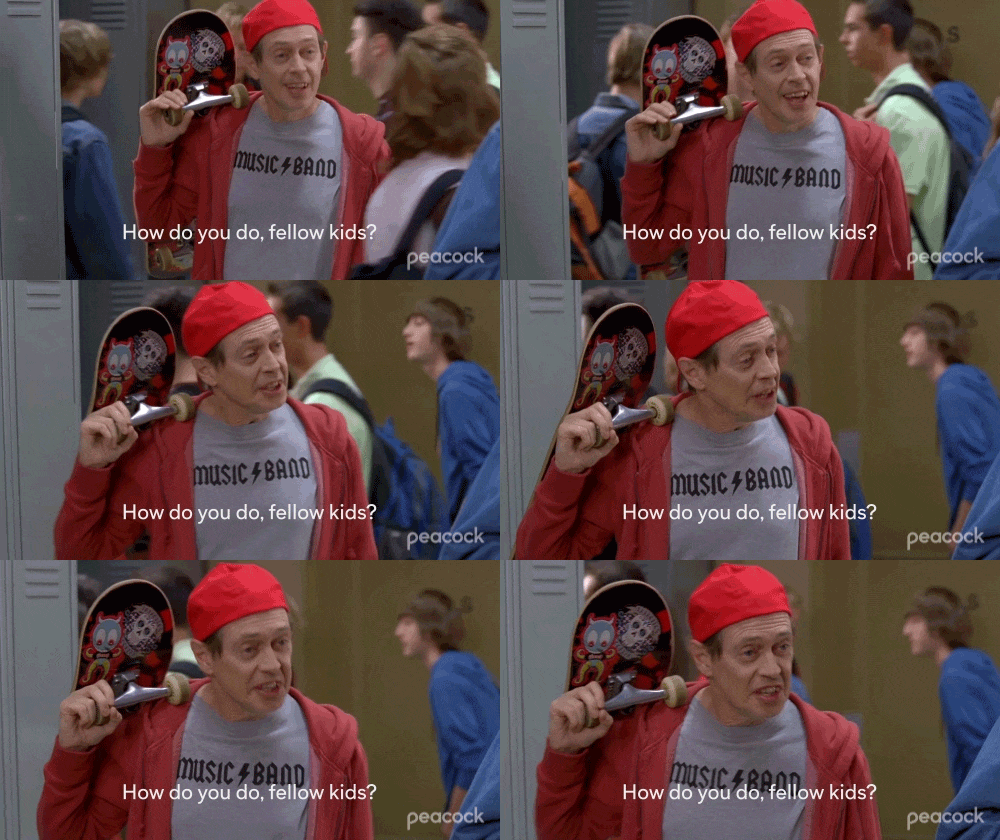
Gaspard was clear on the value from his perspective — he’s gaining access to TF1’s full archives of past reporting on the candidates, something he’d never have access to on his own. And despite having 1.7M subscribers, he’s already seeing noticeable audiences coming from on-air mentions from TF1. On TF1’s side, they get the benefit of connecting with new audiences through Gaspard, and gaining understanding of how to reach them. Julien Laurent, the Chief Digital Officer at TF1, said incredibly, “We never wanted to mimic creators. We didn’t want to cosplay them.” Working with Gaspard G lets them connect with a new generation without the risk of looking like Steve Buscemi with a skateboard.
Even after an hour-long passport control line, I left Lisbon in good spirits—I’d barely gotten any time to wander its streets (though I got to do that at length with Derek Muller the previous year, while he told me the story that he’d tell everyone in his amazing Christmas Eve video) or eat much that wasn’t grabbed from a tray at the conference (thanks to Ben Odell for making a break with me for a great dinner one night), but I think we’re going to see some exciting collaborations between creators and three-letter organizations in 2026, and everyone I talked to from those places was incredibly smart and committed to getting it right. There’s another StreamTV around the corner in Denver in June that will draw more of a North American crowd—I’ll be there, as will Evan. You should join us.