What will the new Meta rules mean for creators (and kids)?
The cops are coming for teens’ watch time, while YouTube and the streamers get grayer.
First published on Creatorama ↗
August went out with a bang with some regulatory moves that could be defining for social media, if they have any teeth.
Meta just came to a settlement with 29 US state attorney generals and agreed to sweeping changes for users under 18, including two hour time limits, blocks on usage overnight and during the school day, and improved parental controls. There are also provisions that kick in if Snapchat, YouTube, and TikTok join the agreement. Assuming the platforms actually implement and enforce these age rules at scale1, the total amount of watch time by teens and kids in the US could measurably decrease.
As a parent, it’s hard to see reduced watch time as a bad thing, but I think we all should be concerned about what age-verified accounts mean for kids’ anonymity and privacy in their social media use, which is a place where they learn and create and grow as much as where they kill time.

Those of us growing up mostly in the pre-Internet era never had any corporations or governments keeping a log of every book or article or comic we read, all the music we listened to, TV shows and movies we watched, not to mention everything we were creating and everyone we were hanging out with, and profiling us in a permanent record along with time spent on each activity. The more analog avenues are still there for kids to spend time in ways less under the panopticon’s watchful eye, but it’s not realistic at this point to think that apps like YouTube and TikTok still won’t be central to how kids experience the world. (Taylor Lorenz has been all over this, and I’d recommend her post on social media bans for a deeper discussion.)
But with less watch hours to go around—and kids are the cohort of internet users who have had the most time for social media—this also might mean kids will get more mindful of where they spend their time. The rule of power laws, summarized here by Craig Shapiro, will likely apply—the most popular channels in every category and niche will likely be fine, and even grow, but there could be less opportunity for newer or smaller channels that appealed to younger viewers to grow and maintain their audiences.
It’s notable these regulations aren’t being talked about applying to streamers like Netflix, which could benefit from kids shifting their always-on, second screen viewing habits away from YouTube. This could also add fuel to the fire of a small but growing number of top creators licensing their shows and videos to Netflix and FAST channels, where I would note they’re missing all of the community features and related video context that’s such a huge and fun part of the YouTube experience. Natalie Jarvey goes into all of that in detail this week (and covered creators and FAST channels a few months ago).
If there end up being less kids to cater to, will creators have to lean more towards appealing to older audiences—especially retirement-aged users, whose use of YouTube has doubled in the past two years? Everyone likes to talk about YouTube as the new TV, but remember that the average age of TV viewers is over 60.2
in other news:
M. Night Shyamalan just joined his fellow wunderkind horror directors Kane Parsons and Curry Barker in starting a YouTube channel. His house is pretty amazing.
Emily Sundberg noted an interesting trend in the news of Kyle Buchanan leaving the NYT to start a video podcast:
It feels like we’re going to be seeing lots of this – print journalists moving into exclusively audio-video spaces. It’s interesting that one of the things Buchanan mentions in his comments is that subjects want to have longer conversations – a thing that can obviously happen in audio/video and even some magazines still, but just can’t happen in a newspaper profile.
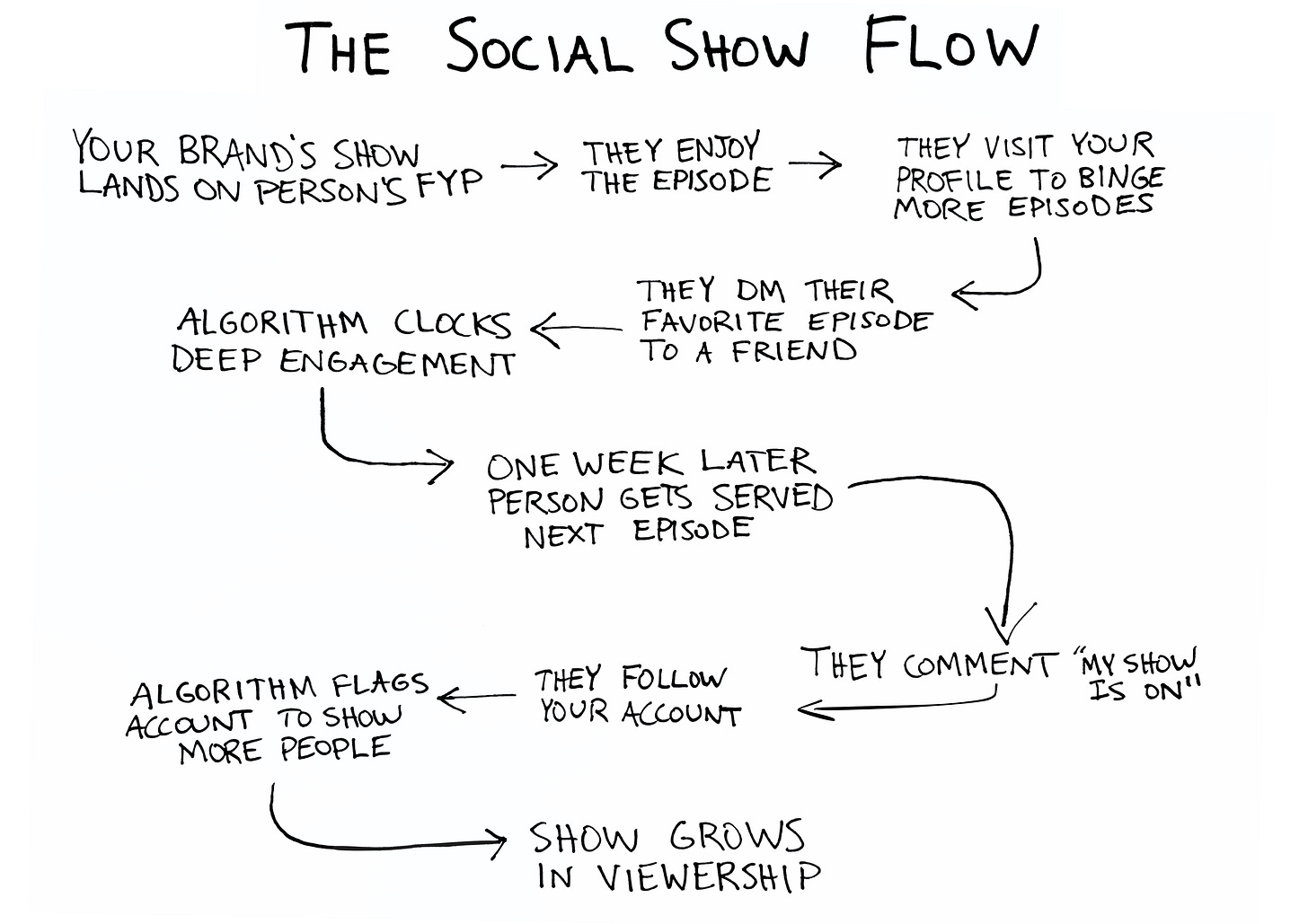
Rachel Karten interviewed the creators of ScreenTime, the “SportsCenter for the creator economy.” It’s a good, dumb, fun idea. She also talks about the new ways creators are building audience by releasing serialized, episodic shows in the feeds, with this cool chart:
Also, the NY Times has a good report on how the streaming wars are now becoming the bundling wars. How soon will we see subscription bundles come to places like Substack and Patreon to combat indie subscription fatigue? I’ve thought more than once about a startup around that, but the solution will probably come from the platforms.
Hey, thanks as always for reading! Please check out my post on Felicia Day’s record-breaking fundraise if you missed it, or learn about the wild world of refillables (which got a comment today from Fred Graver, one of the most legendary creators of the format with things like David Letterman’s Top Ten Lists and VH1 shows like Best Week Ever).
today’s vid
I’ll always be glad a younger version of me was smart enough not to miss one of Digable Planets’ first shows (the 9:30 Club, D.C., March 1993). Cadillac Chronicles is a great Atlanta-based show that’s hosted by artist Brian Freeman from the back of a 1974 Eldorado, and Butterfly, Doodlebug, and Ladybug Mecca still sound impeccable in 2026.
This all requires social platforms to know the ages of their users — much of which has been self-reported until now and easy to falsify, and will require Meta and others to use increasingly intrusive tech, like face scans, ID uploads, behavioral profiling, or third-party signals (Apple and Google have similar needs for age vertification on devices for things like content restrictions and app store downloads).
It’s not just TV and YouTube – as the US population ages, streamers have been seeing their audiences get grayer for years, and could welcome any strategy to get younger viewers in, especially since the amount they’ve spent on creator deals to date is barely a rounding error in their business, and has already generated some top 10 hits. See also Netflix investing heavily in its anime lineup for yet another year.